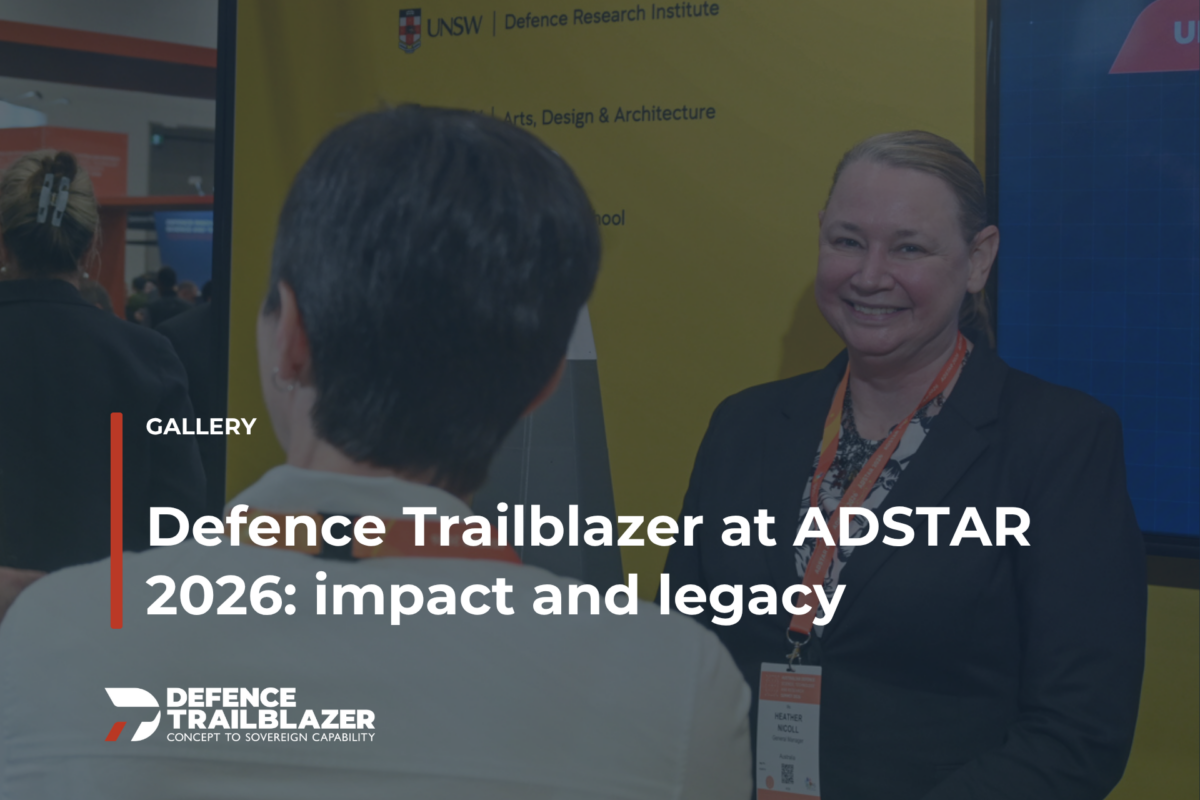
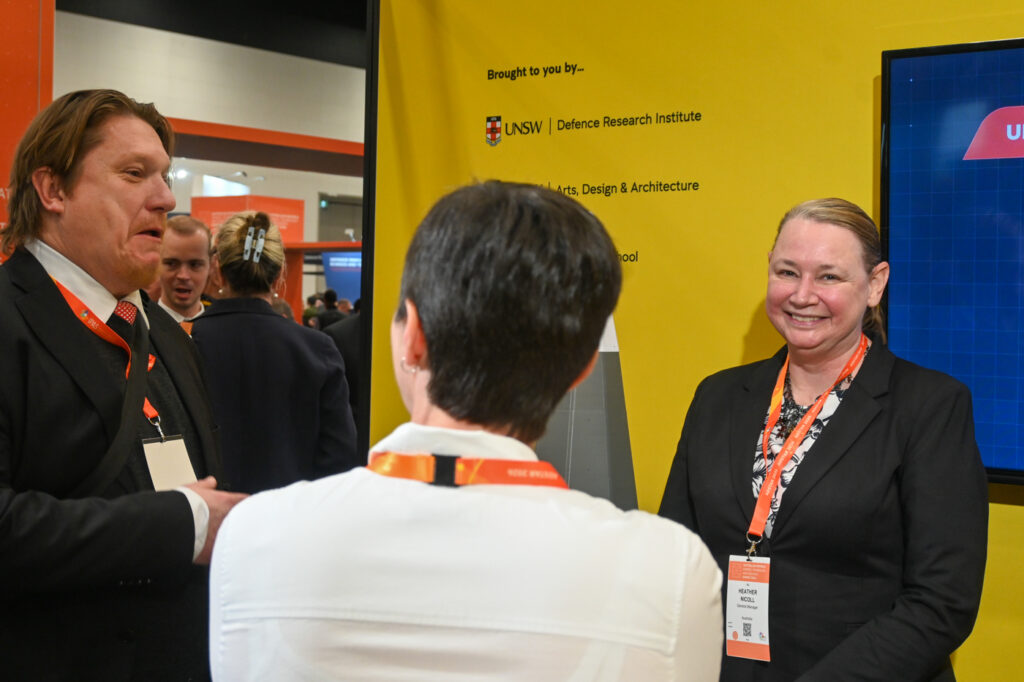
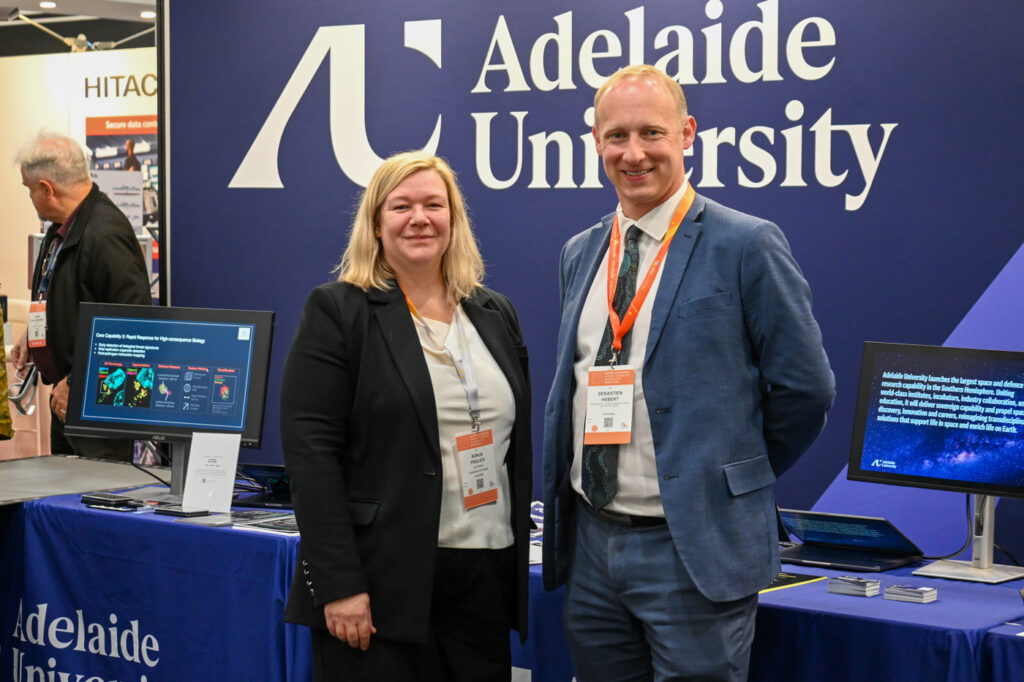
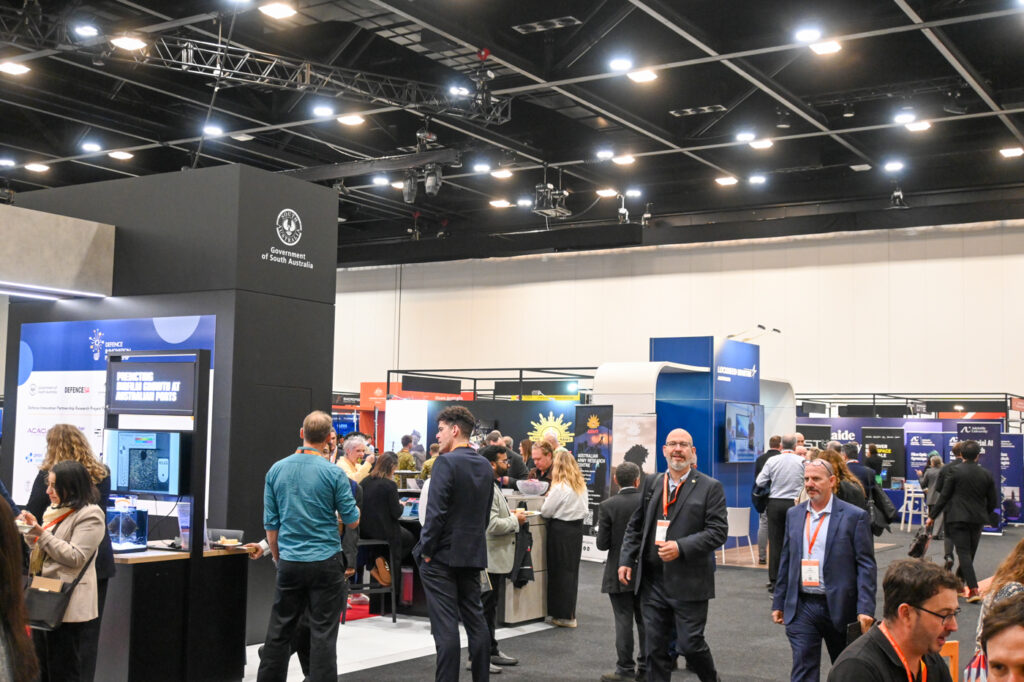
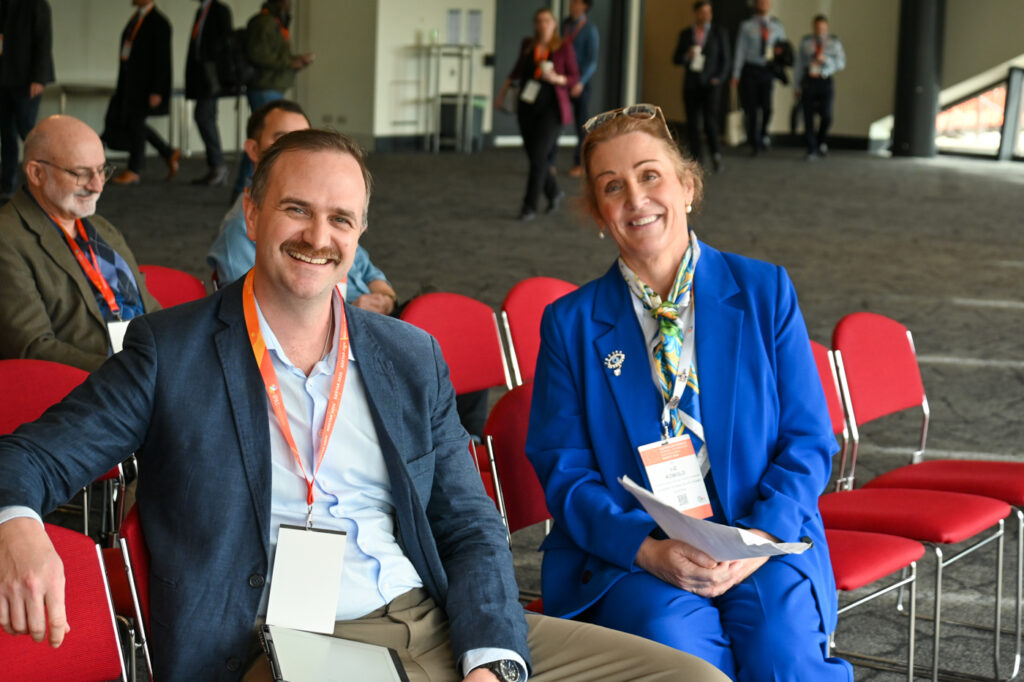
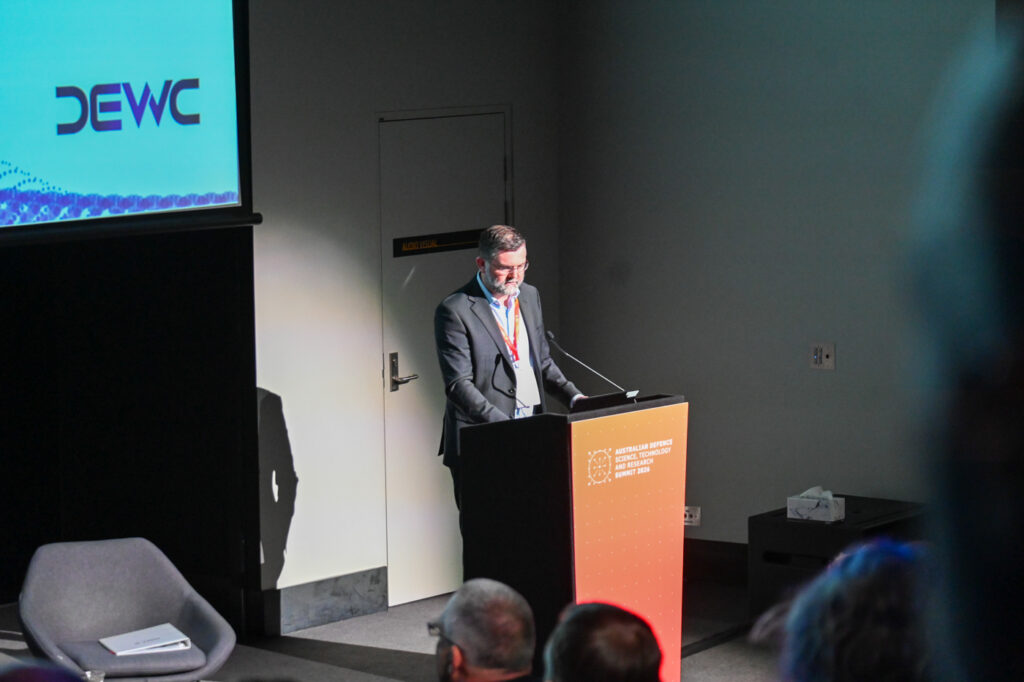
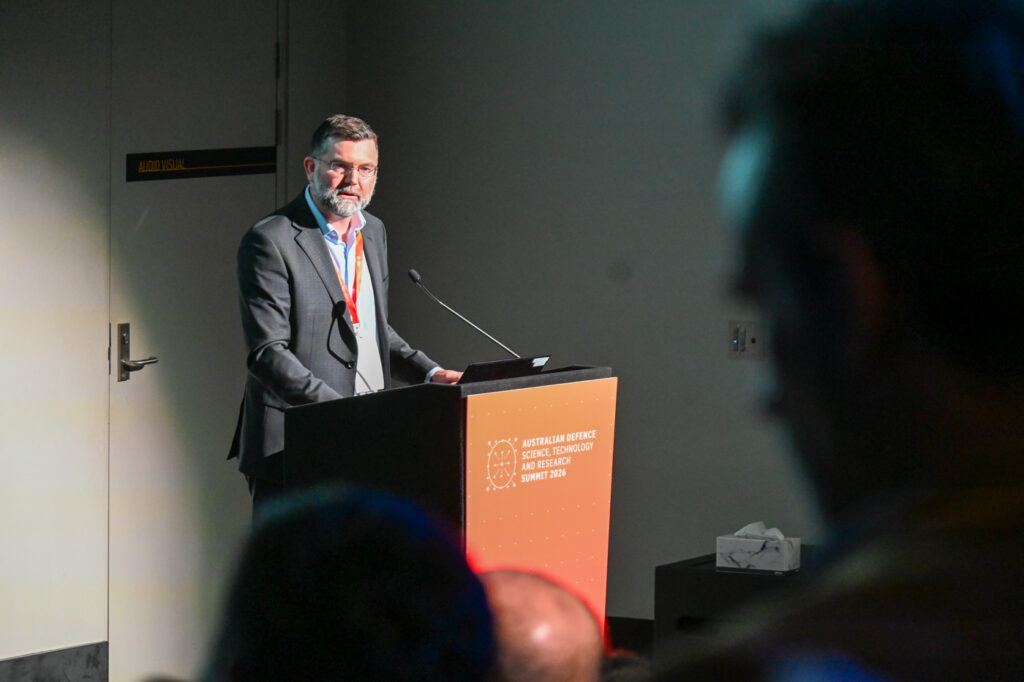
The Australian Defence Science, Technology and Research (ADSTAR) 2026 summit took place in Adelaide this month, and the Defence Trailblazer Concept to Sovereign Capability legacy was on show — from the opening plenary stage to the exhibition floor.
Held over three days at the Adelaide Convention Centre under the theme Delivering More, Together, ADSTAR brought together Defence, industry, academia and international partners to explore evolving priorities Australia’s sovereign defence capability. More than 20 researchers, entrepreneurs and industry partners connected through Defence Trailblazer contributed across the program.
A mention from the top
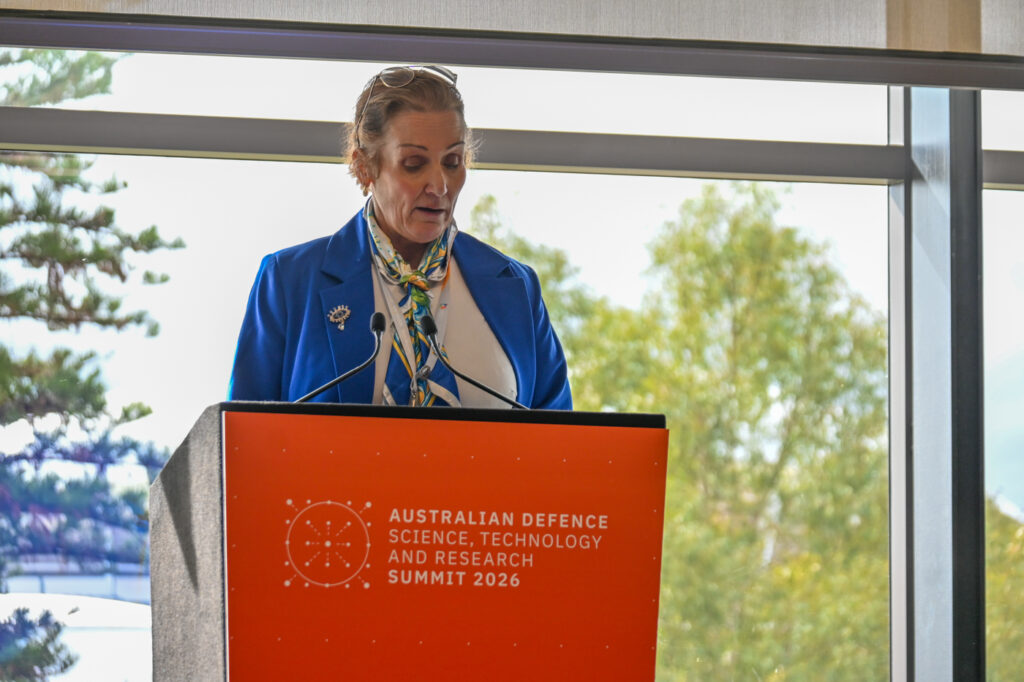
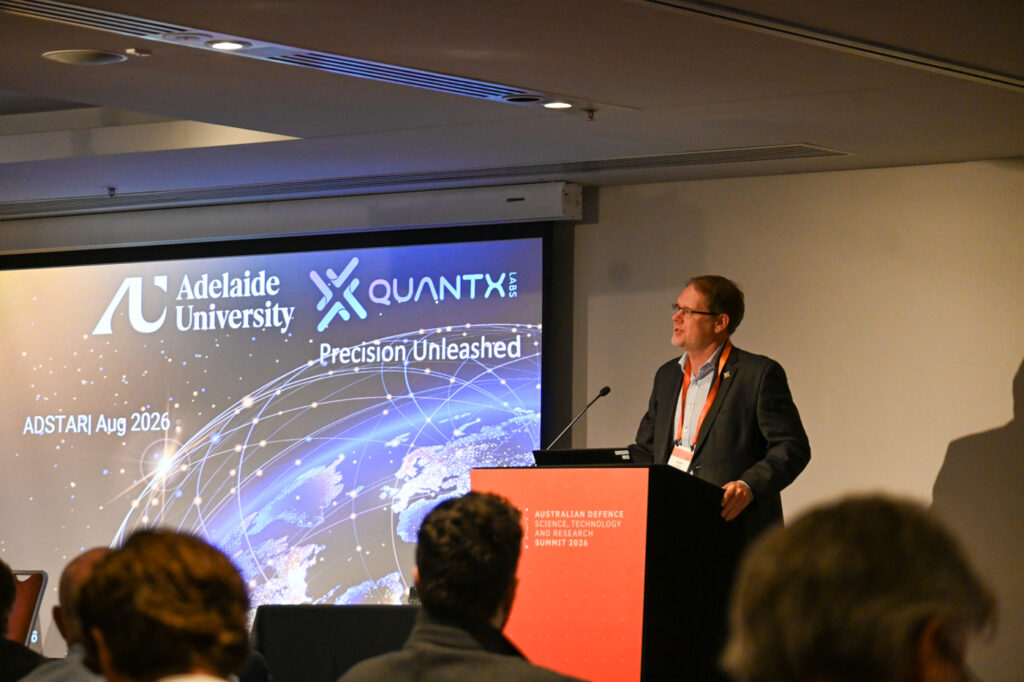
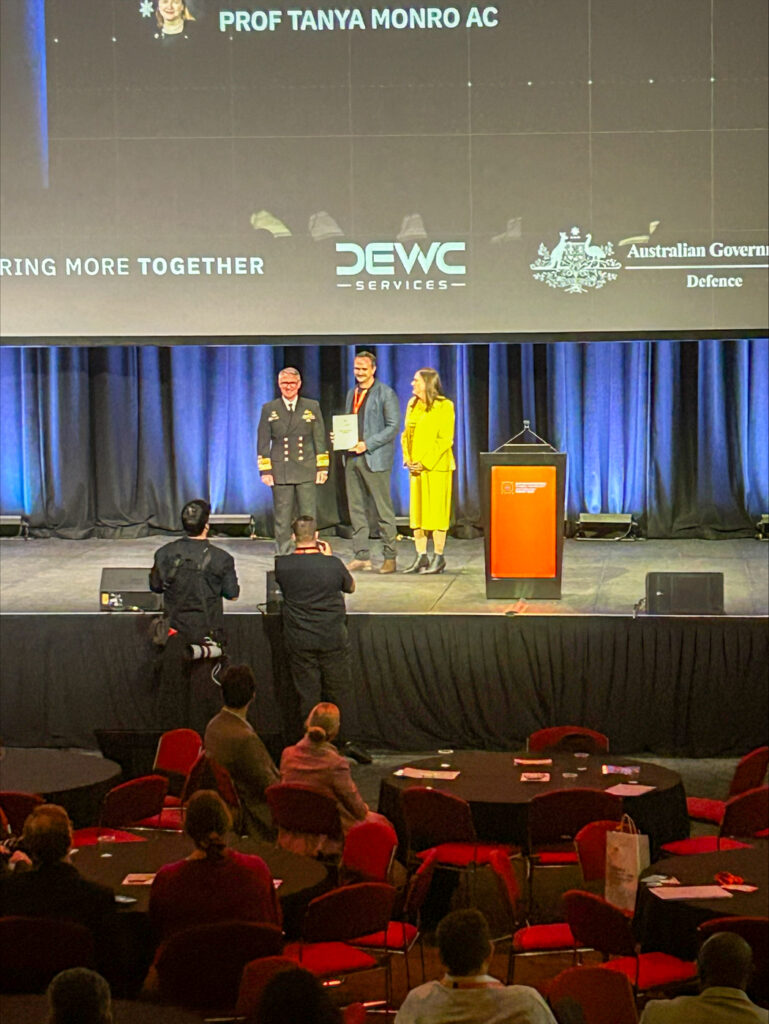
Senator the Hon Penny Wong, Minister for Foreign Affairs, opened the summit on 4 August with a plenary address in her hometown of Adelaide, speaking to the same day launch of the new Defence Innovation, Science and Technology Strategy (IS&T Strategy). She pointed to Adelaide University’s QuantX Labs as an example of research translating into sovereign capability and commercial success, before turning to the momentum building in South Australia’s broader defence innovation ecosystem — naming Defence Trailblazer directly alongside innovation precincts Lot Fourteen, the Osborne shipyard, the Australian Institute for Machine Learning, and Defence Trailblazer industry partners Acacia Systems and Silentium Defence.
A strong presence across the program
Defence Trailblazer-linked speakers featured throughout the conference, including:
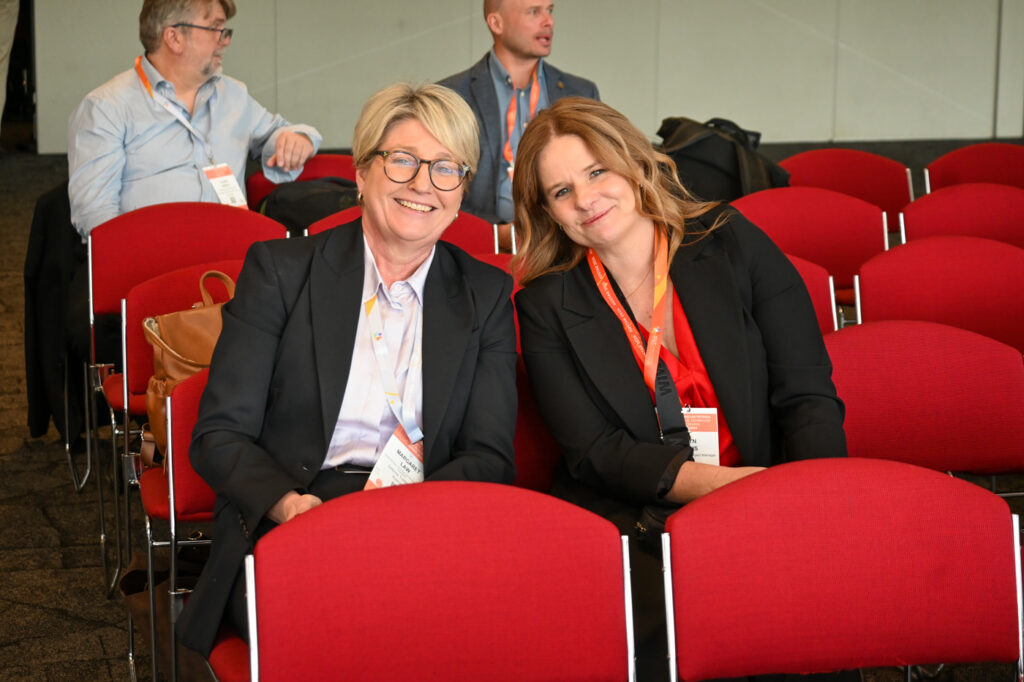
- Dr Margaret Law, Defence Trailblazer — From Laboratory to Factory: Taking Research to Scale
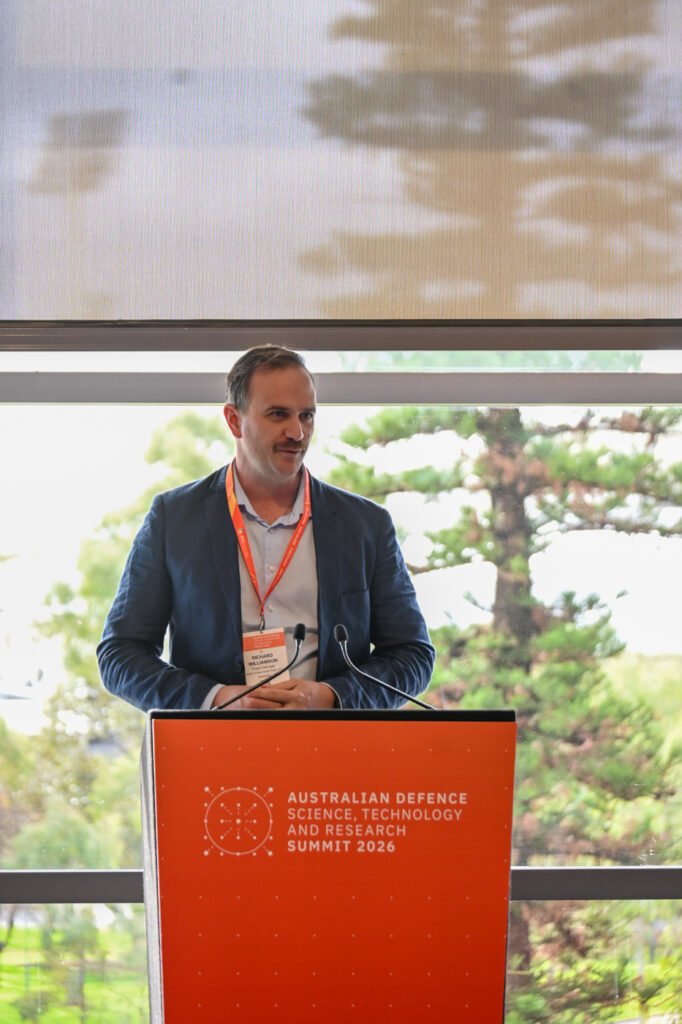
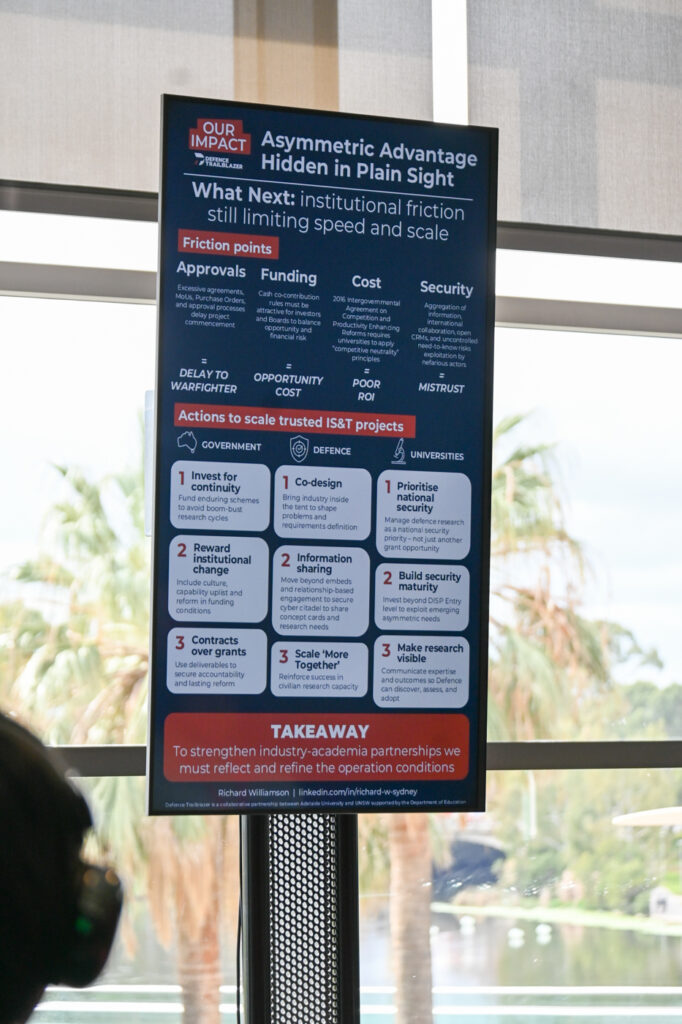
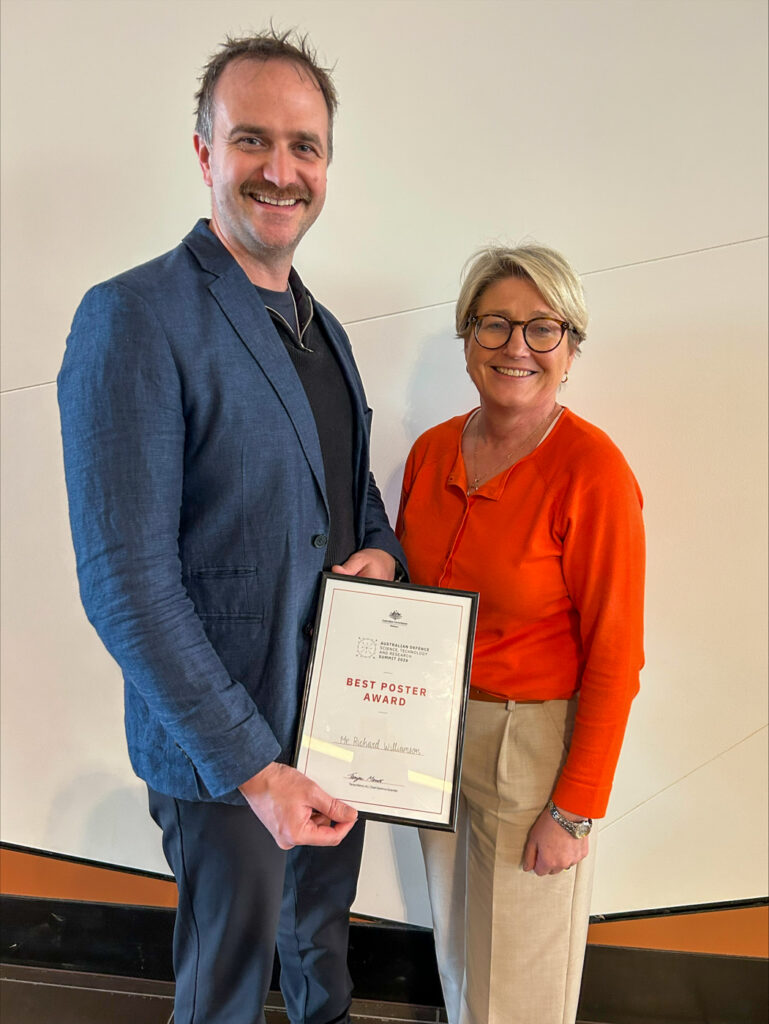
- Richard Williamson, Defence Trailblazer — Asymmetric Advantage Hidden in Plain Sight (e-poster – download)
- Liz Kobold, Defence Trailblazer — Network Entrepreneurs in the Defence Innovation Ecosystem (e-poster – download)
- Dr Sonja Frölich, Adelaide University and DefenSight (Defence Trailblazer-supported spin-out)
- Dr Oleksandra Molloy, UNSW Canberra (Defence Trailblazer R&D project investigator)
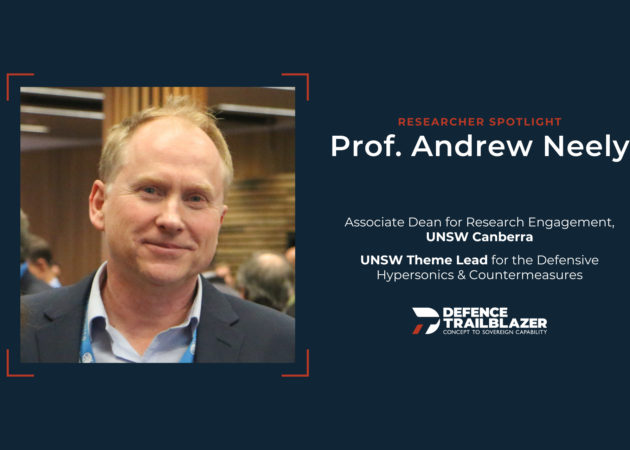
- Professor Andrew Neely, UNSW Canberra (Defence Trailblazer R&D project investigator)
- Dr Jonathan Thomas, Adelaide University and Praetorian Aeronautics (Defence Trailblazer R&D project)
- Professor Andre Luiten, Adelaide University, IPAS-QT and QuantX Labs (Defence Trailblazer R&D projects)
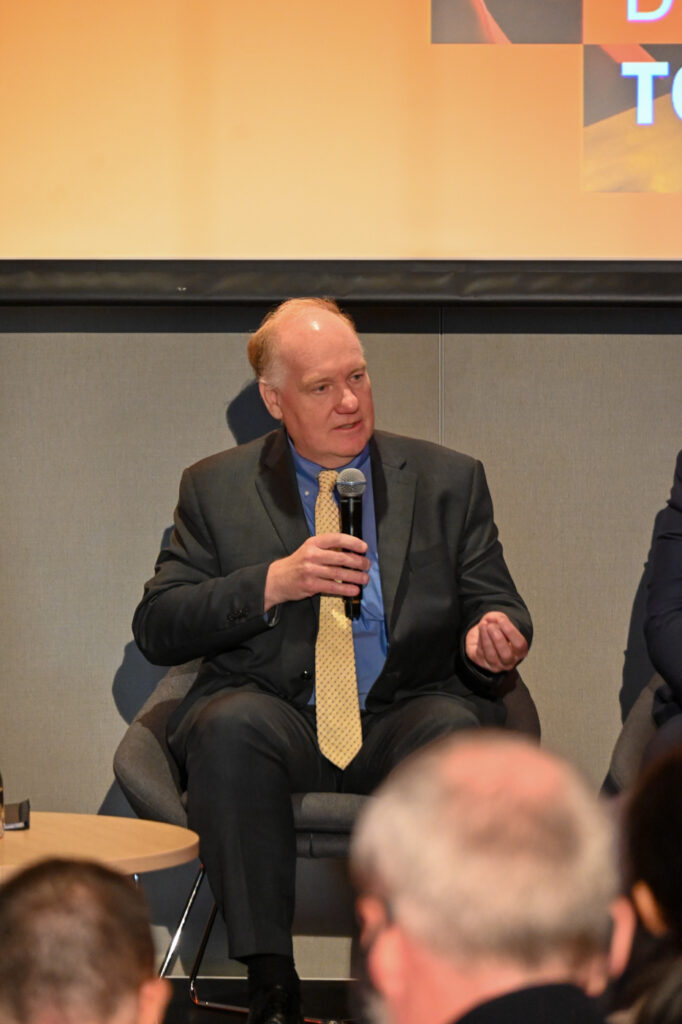
- Professor Anton Middelberg, Adelaide University — panel, What an Integrated National DIS&T Ecosystem Needs to Look Like by 2030
- Troy Boswell, DEWC Services — Rapid Operations Research: Compressing the Analytical Cycle (Defence Trailblazer R&D project in collaboration with Adelaide University)
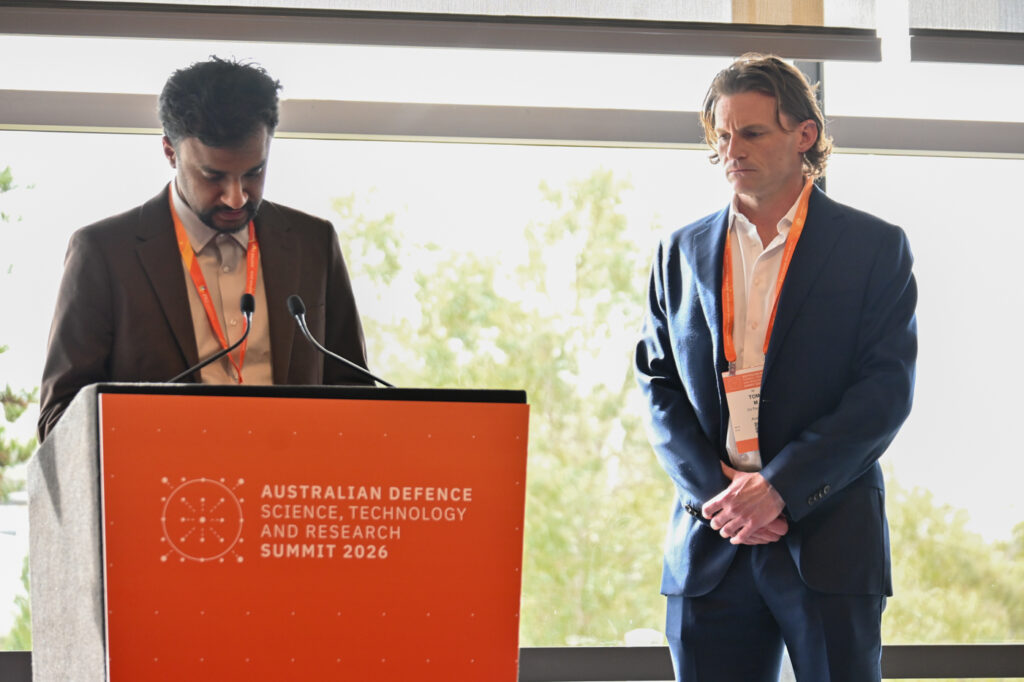
- Tom Marchant, Cyndr and Aarya Bodhankar, UNSW — Didact: A Cross-Domain Capability Discovery System for Defence (a Defence Trailblazer R&D project)
- Dr Tony Scoleri, AICRAFT — Synthetic Aperture Radar
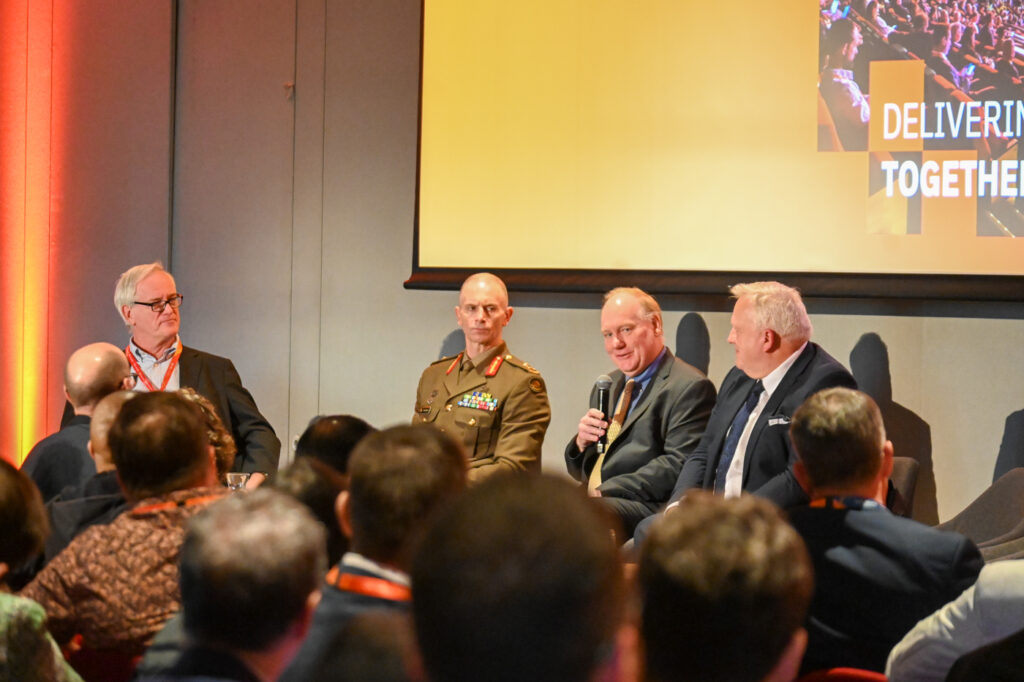
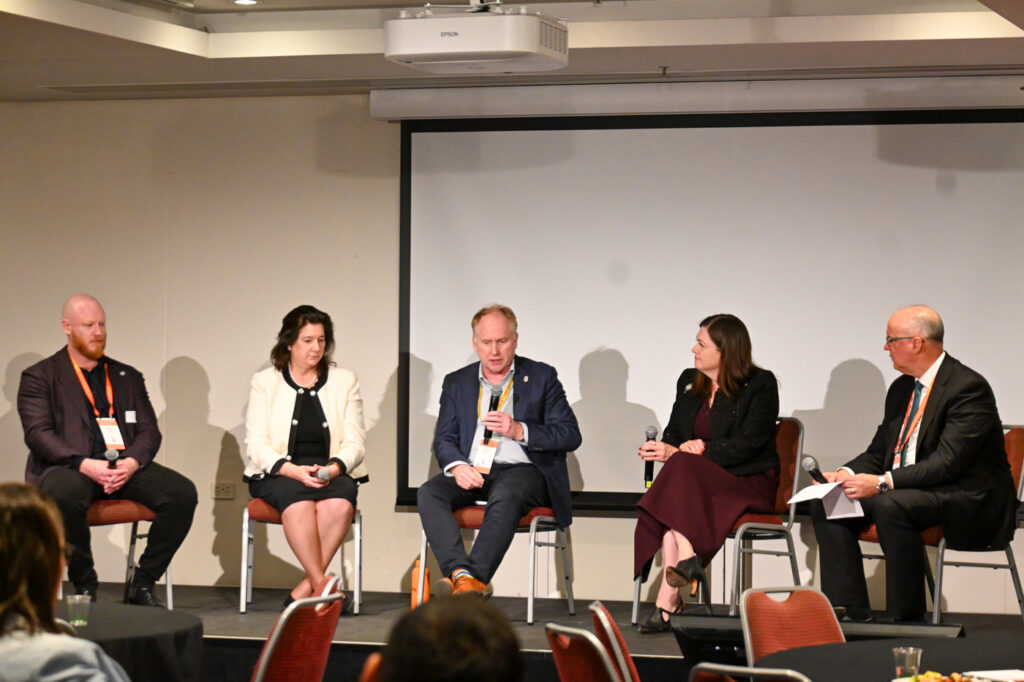
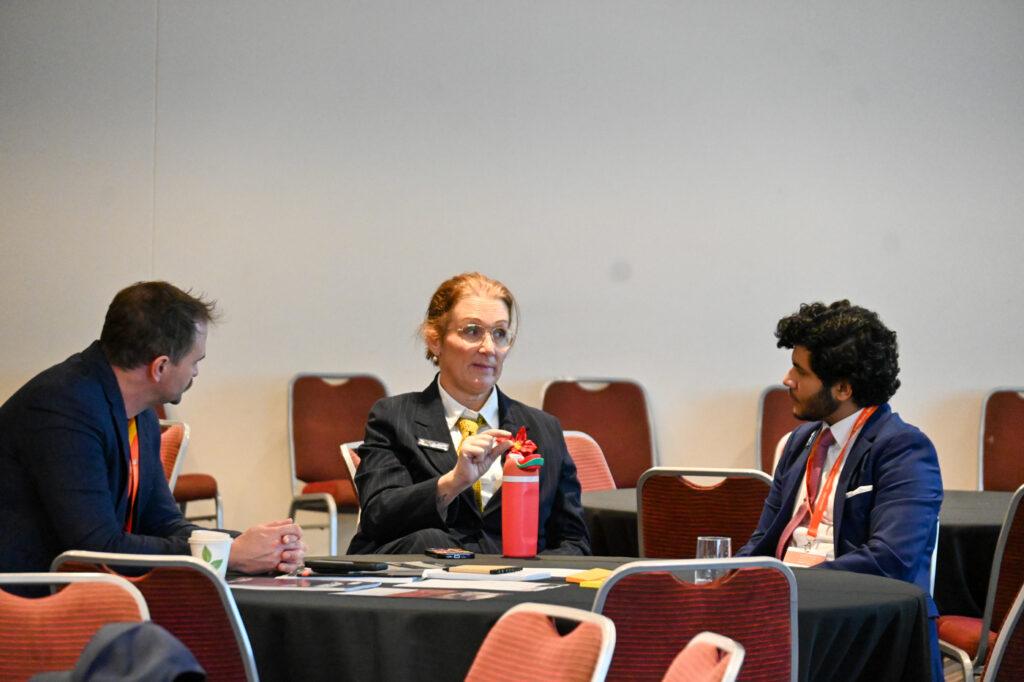
Dr Sanjay Mazumdar, Executive Director of Defence Trailblazer, joined a panel discussion on industry and education, speaking to how the program brings Defence, industry and academia together around Defence’s priority needs, and how it helps early-stage companies become “Defence ready, tech ready, commercial ready and investment ready.”
Four years, $140 million, and what comes next
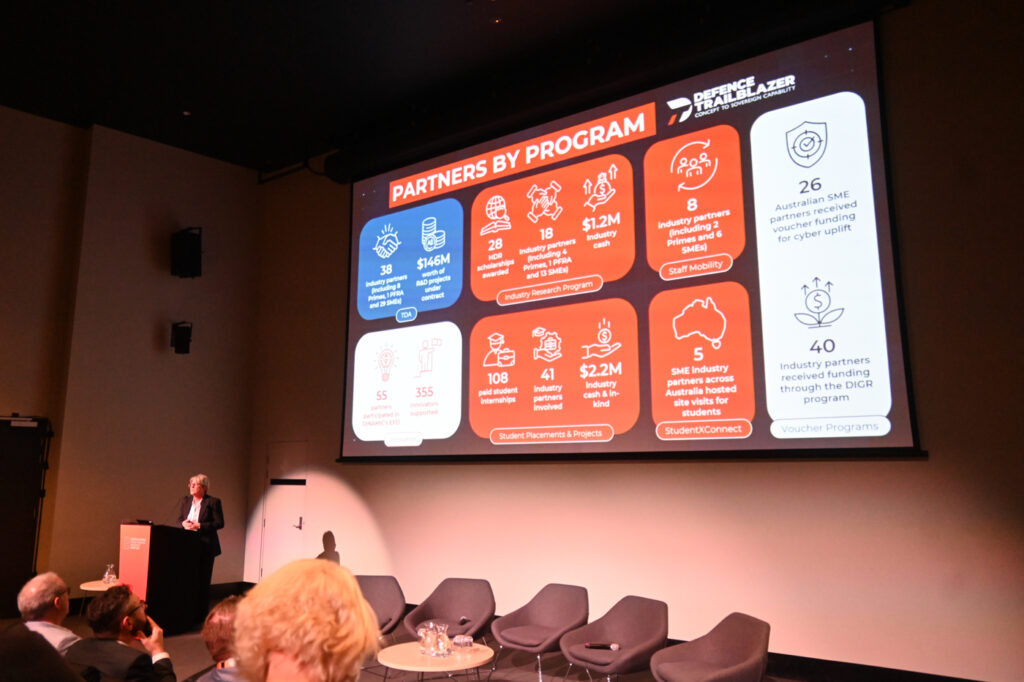
Dr Margaret Law’s session, From Laboratory to Factory: Taking Research to Scale, set out the scale of Defence Trailblazer’s impact since it was established as a partnership between Adelaide University and UNSW four years ago.
Industry has been the program’s single largest funder, investing more than $140 million in cash and in-kind support. Independent economic modelling estimates the program’s initiatives will deliver an $875 million boost to Australia’s GDP and support more than 1,000 jobs over the next two decades.
More than 230 industry partners have engaged with the program — 87% of them Australian SMEs — alongside 108 paid student internships, 28 industry-led PhDs and over 800 students and professionals upskilled. Both universities are continuing to build on that foundation: Adelaide University is expanding its Defence footprint at Lot Fourteen, while UNSW Canberra Space and UNSW Sydney remain central to Defence Trailblazer-linked projects showcased throughout the summit.
Read more and see the full list of Defence Trailblazer partners at ADSTAR 2026.
ASCA Pitch Day and building the skills to communicate value
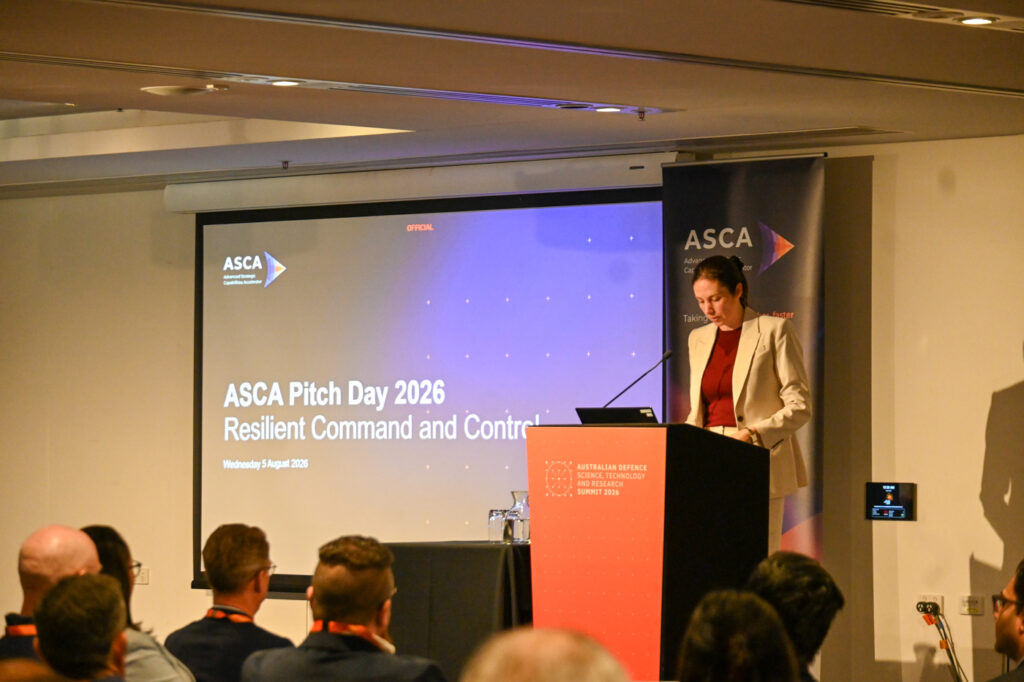
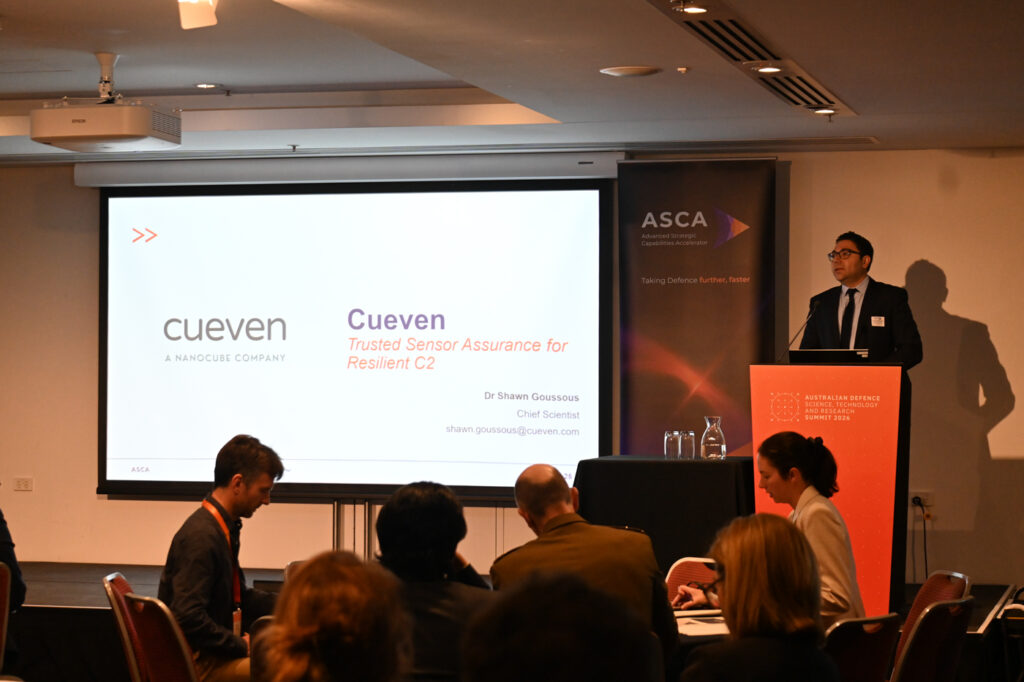
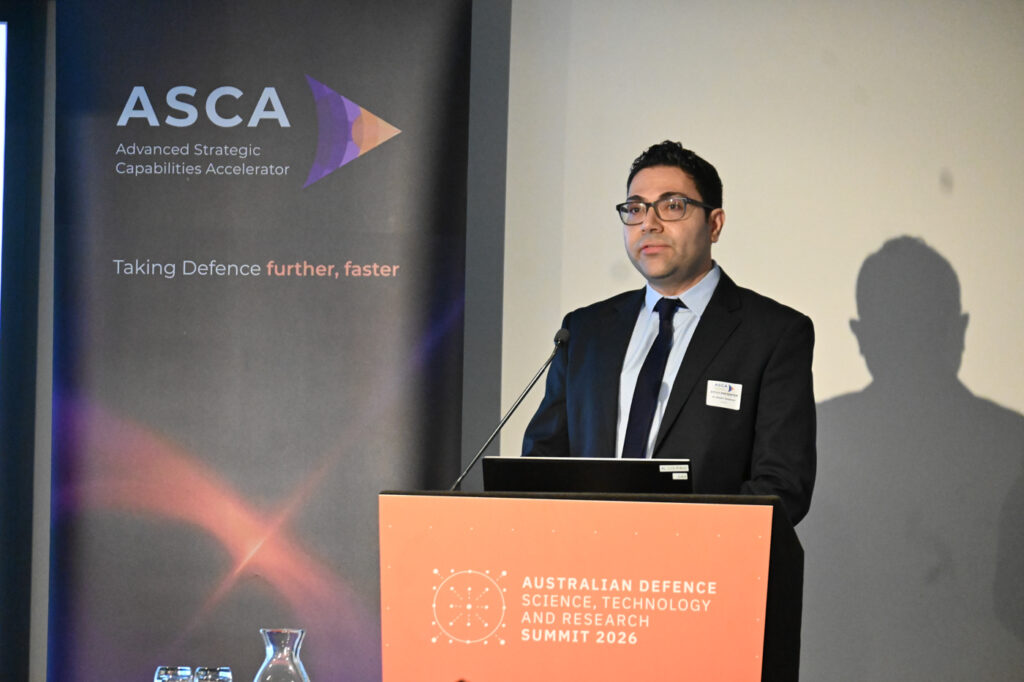
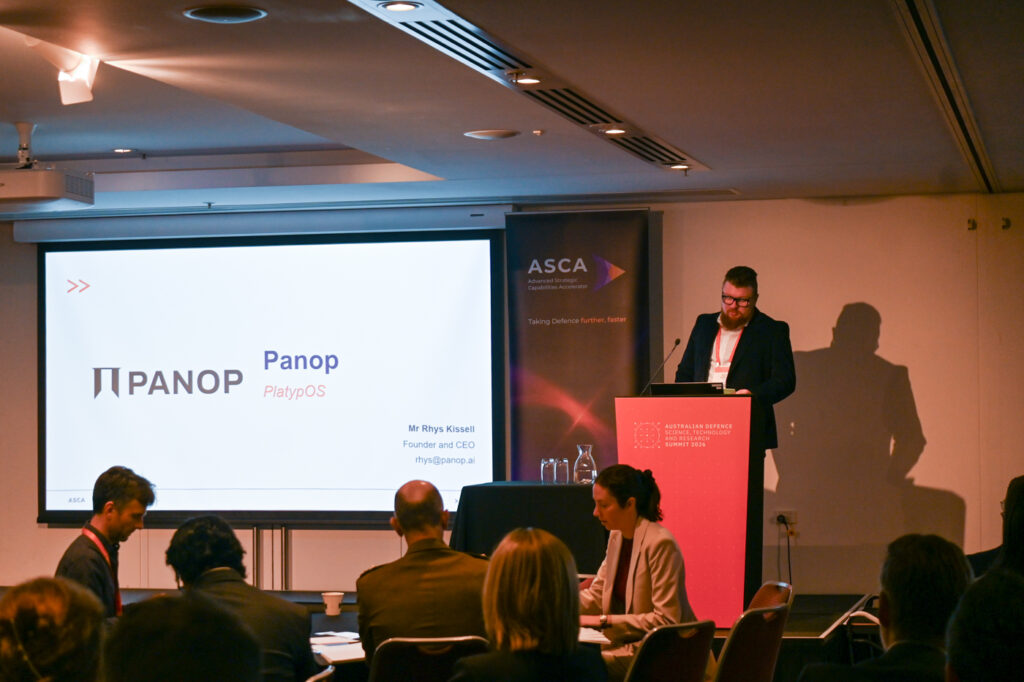
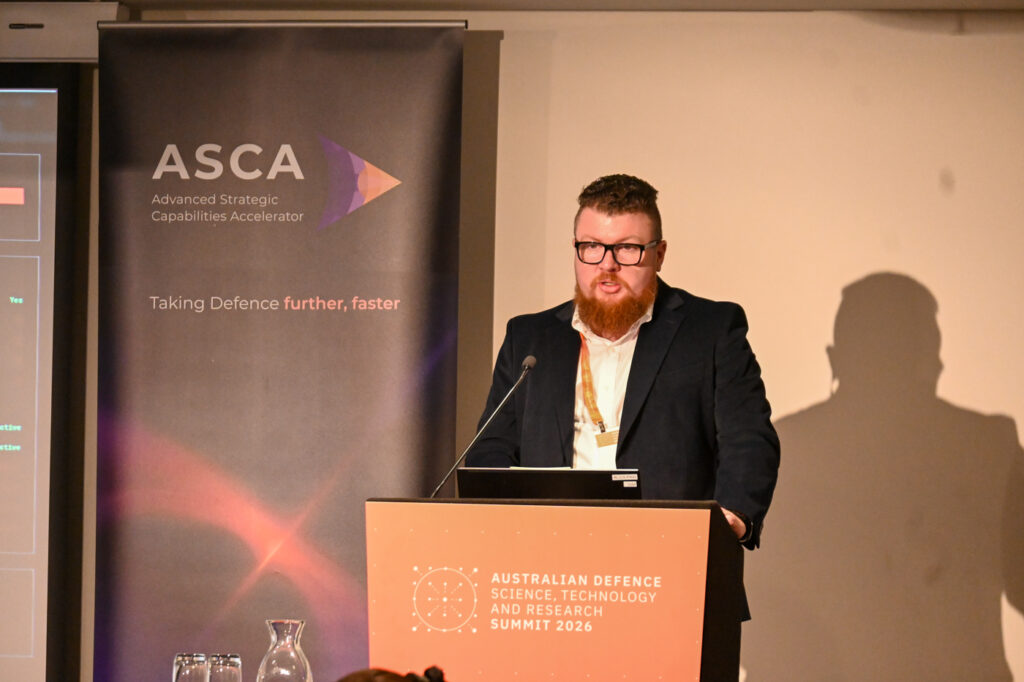
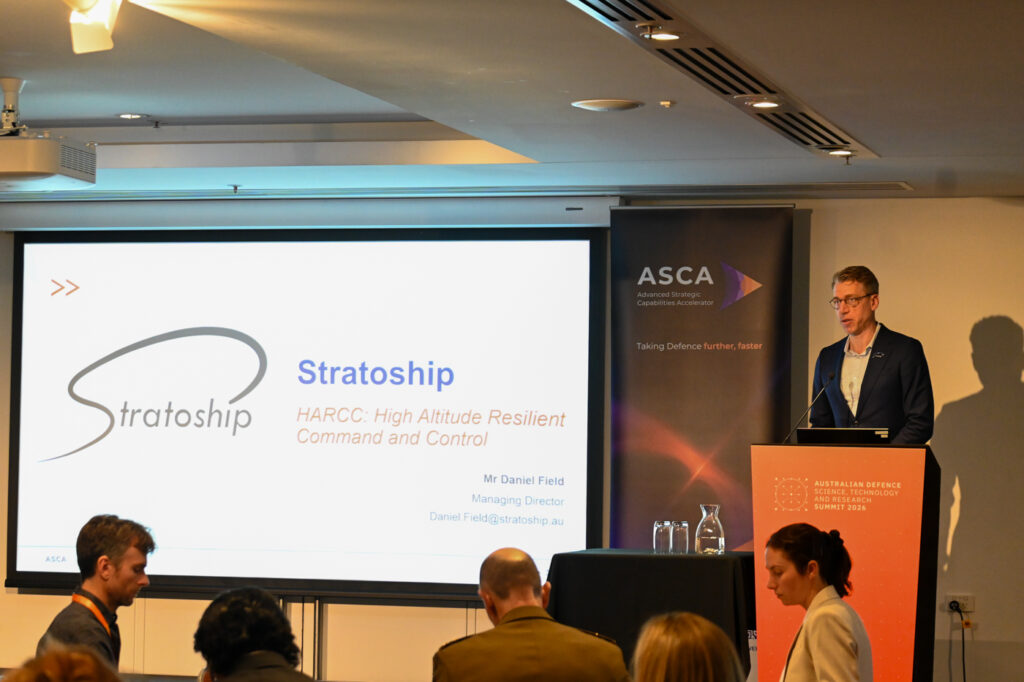
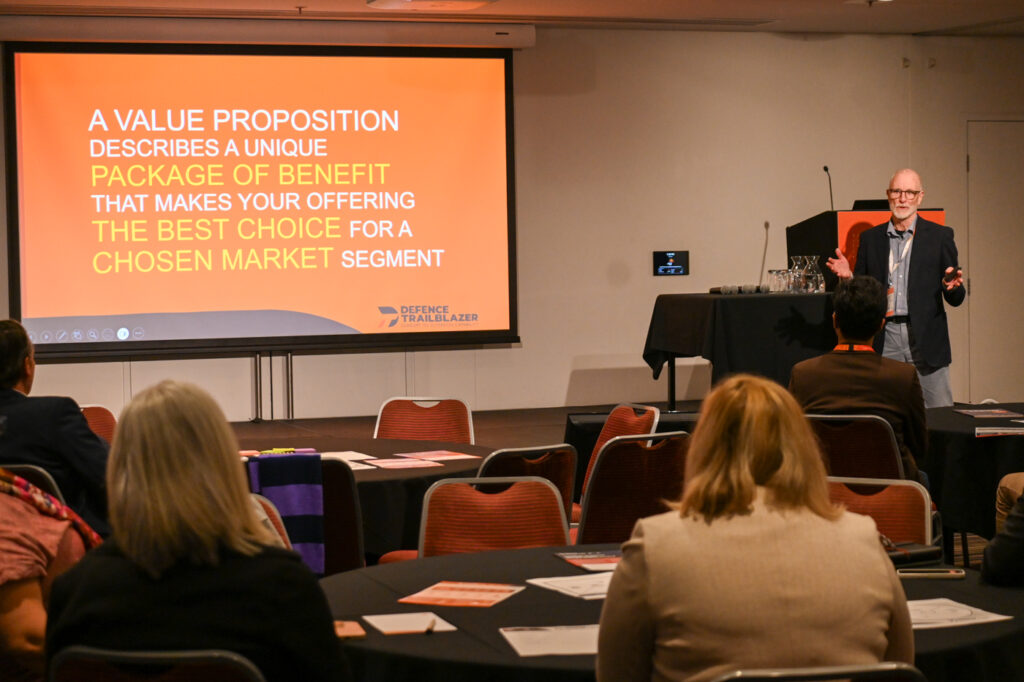
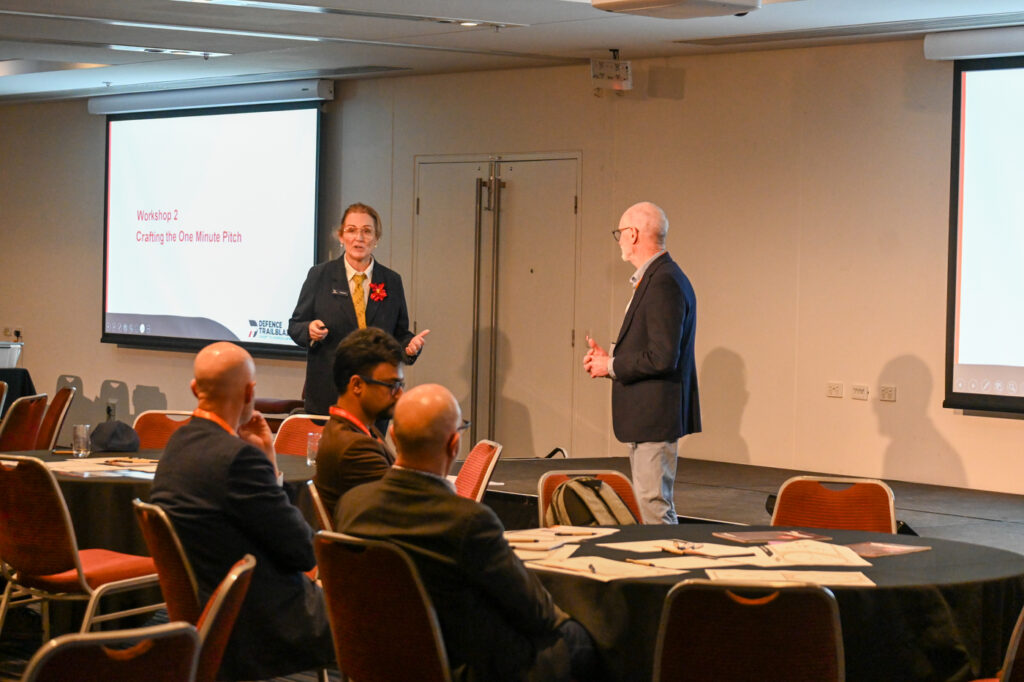
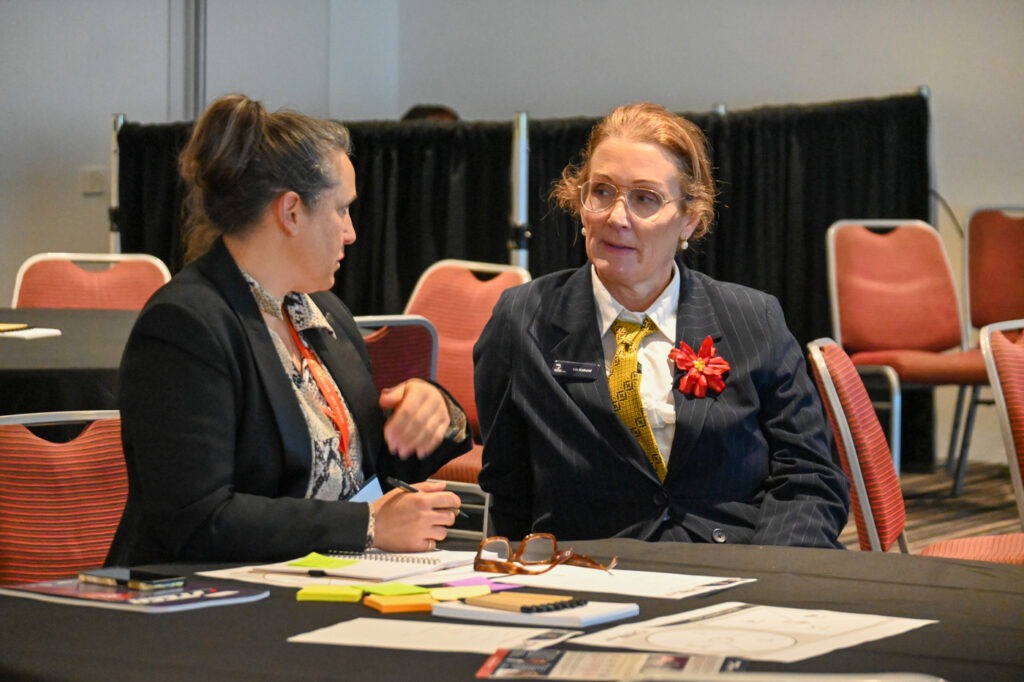
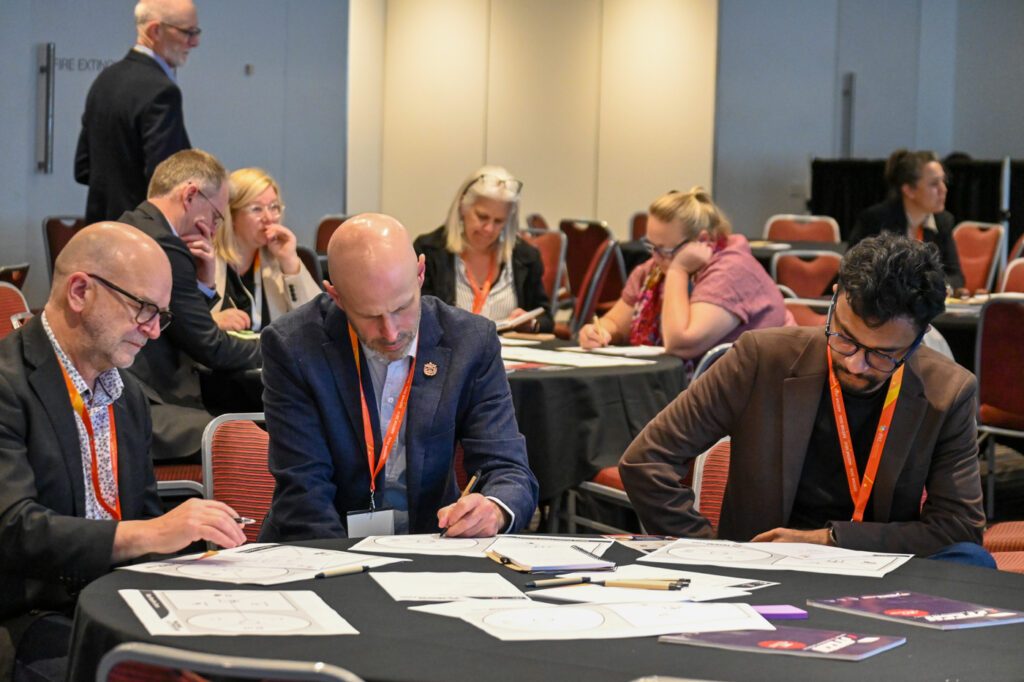
Defence Trailblazer-linked ventures PANOP, Cueven (a Nanocube company) and Stratoship took the stage at the Advanced Strategic Capabilities Accelerator (ASCA) Pitch Day, putting the program’s innovation and commercialisation pipeline in front of a national audience. Defence Trailblazer’s innovation managers Liz Kobold and Paul Daly also led a workshop, Articulating the People-Focused Defence Value Proposition, helping researchers and innovators sharpen how they communicate their technology’s value to Defence.
Optimising satellite constellation design
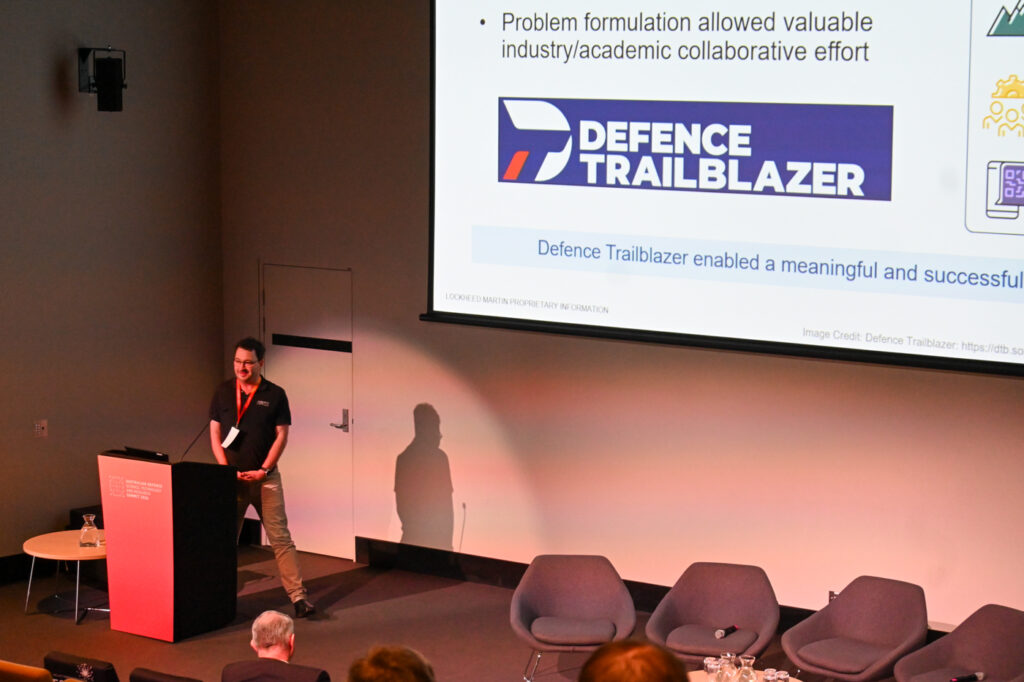
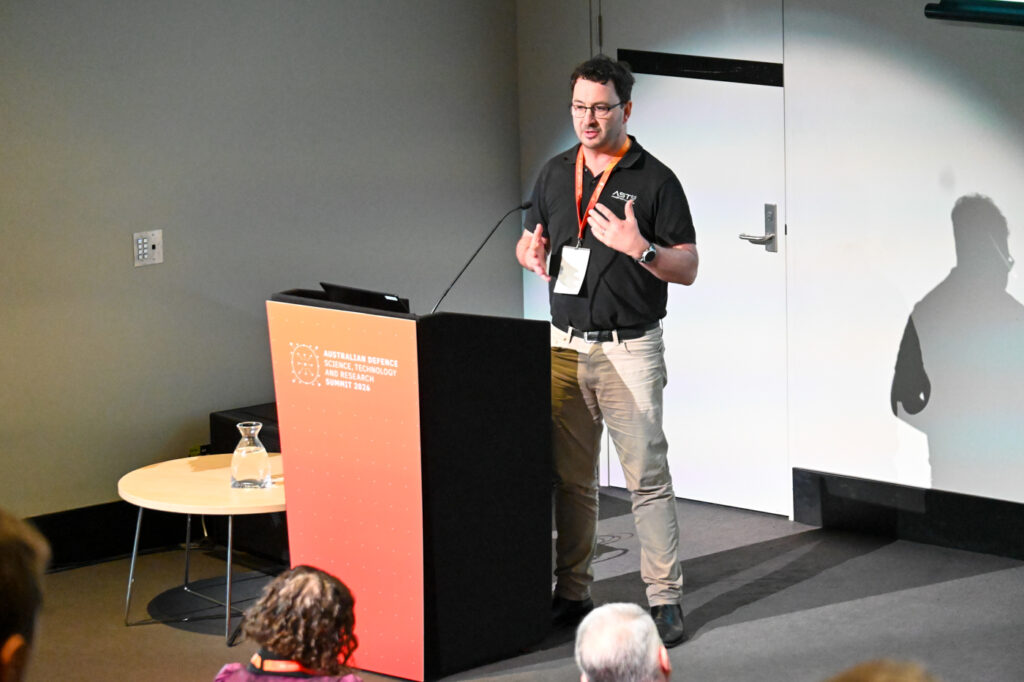
Luke Tracey, from Lockheed Martin Australia’s Advanced Systems & Technology R&D facility, gave a presentation on a Defence Trailblazer-facilitated project with UNSW Canberra Space, with Dr Melrose Brown of UNSW Canberra credited as co-author. The collaboration uses university expertise in optimisation and high-performance computing to narrow the design space for satellite constellations — from hundreds of thousands of potential configurations down to a set of best-fit solutions — balancing technical performance against cost, sovereign content and resiliency.
Testing autonomy for space, safely, on the ground
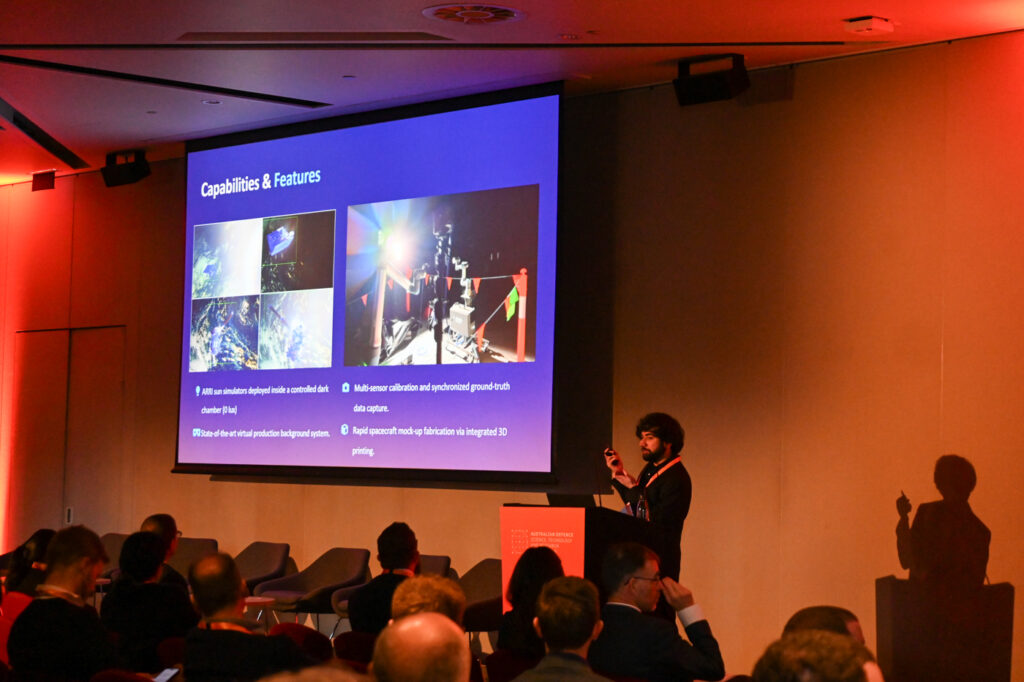
Adelaide University’s Mohsi Jawaid presented CORAL, the Cloud-based Orbital Robotics Lab — a facility that validates autonomous space navigation systems before they leave the ground, supported by Defence Trailblazer alongside Space Machines Company, DSTG and SmartSat CRC. Based at the Exteriors Crater Facility in Roseworthy, CORAL recreates the extreme lighting conditions of space to stress-test sensors, supporting the Australia–India Space Maitri mission for on-orbit servicing and debris removal.
A proof point for the investment
“Defence Trailblazer is demonstrating how a nationally coordinated innovation ecosystem can deliver impact across every stage of the capability lifecycle,” said Dr Mazumdar.
As Defence Trailblazer concludes and Adelaide University and UNSW explore how the AUSDII concept could carry its work forward, ADSTAR 2026 stands as a timely proof point: a national showcase of what happens when university research, industry expertise and Defence need are brought together, and a strong foundation to build on.
During her keynote address at ADSTAR on 6 August as part of the From Anticipation to Action session, Professor Jessica Gallagher, Deputy Vice Chancellor – International and External Engagement at Adelaide University, highlighted Defence Trailblazer as an example of how partners across and within sectors are increasingly collaborating through shared infrastructure, joint research projects, cooperative programs and cross-sector partnerships.
“The Defence Trailblazer partnership between Adelaide University and University of New South Wales is already fast-tracking careers and the commercialisation of research and new ventures,” Professor Gallagher said.
“This has spearheaded sovereign missions, including the development of AI-assisted small satellites for space applications using super-resolution algorithms, and a new quantum clock that will guarantee precise navigation for vessels operating in contested environments, including under the sea.
“The Defence Trailblazer’s proposed Australian Defence Industry Incubator (AUSDII) also promises to provide a structured, defence-focused incubation program that will strengthen Australia’s sovereign capabilities in line with the sector’s strategic growth areas and dual-use technologies, helping early-stage businesses progress and attract investment,” Professor Gallagher said.

About the Defence Trailblazer: Defence Trailblazer is a collaborative partnership between Adelaide University and UNSW supported by the Department of Education and over 200 industry partners and associates. Defence Trailblazer is dedicated to advancing Australia’s defence capabilities through innovative research and strategic partnerships. By collaborating with industry, academia, and Defence (particularly DSTG, VCDF Group, CASG and the Service Innovation Units), we aim to develop and commercialise breakthrough technologies that address critical national security challenges.
Contact Information: For media inquiries, please contact Dr Sanjay Mazumdar, Executive Director smazumdar@dtb.solutions
About the Trailblazer Universities Program: The Australian Government is building new research capabilities, driving commercialisation outcomes and investing in new industry engagement opportunities through the $370.3 million Trailblazer Universities Program (2022–2023 to 2025–2026). Through this initiative, the government is building additional capacity to focus on the problems that matter to the nation by driving research excellence and real-world impact.